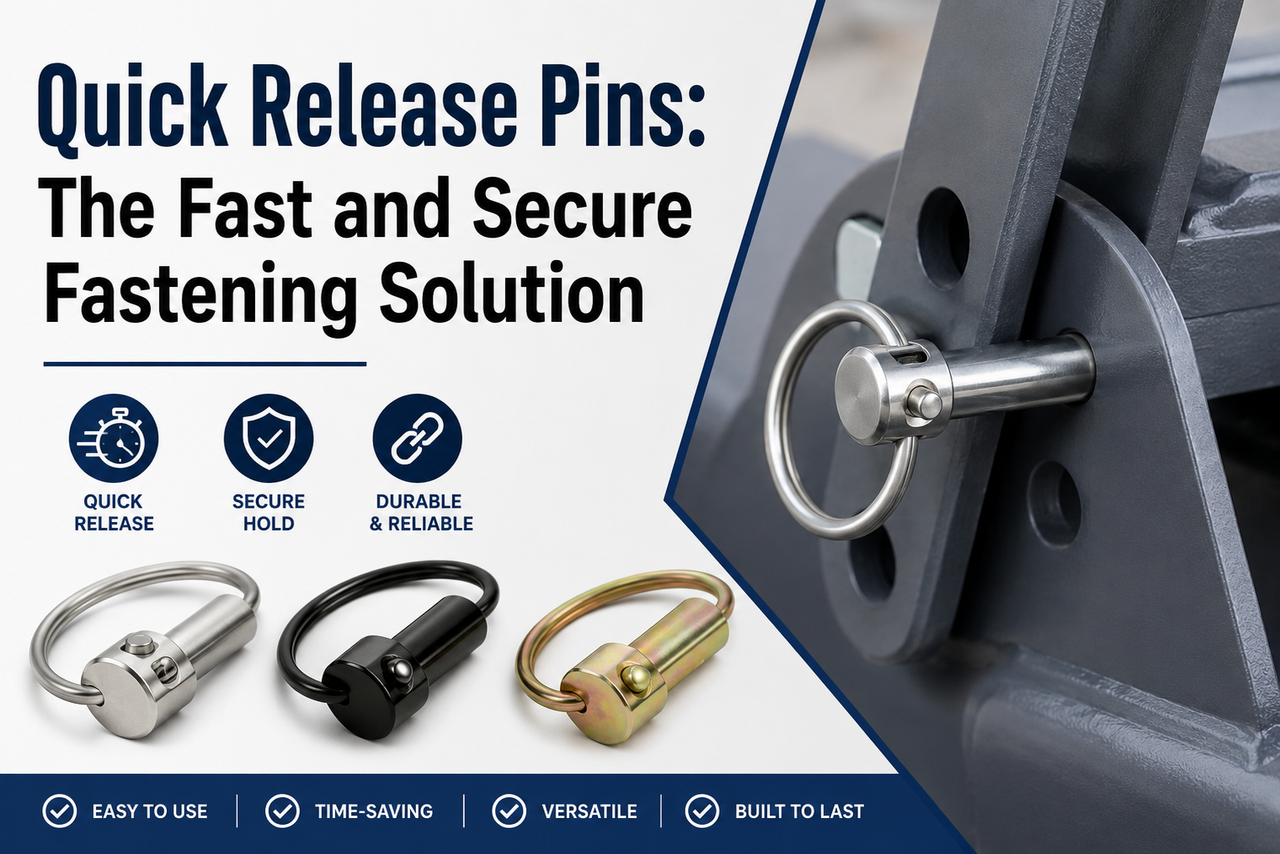
Ever found yourself fumbling with traditional fasteners, wasting precious minutes when you could be getting on with the job? Or perhaps you’ve wondered if there’s a quicker, more reliable way to secure equipment without compromising on safety? If so, you’re definitely not alone.
Quick release pins have become an absolute game-changer across countless industries, from farming equipment in rural Australia to high-performance motorsport applications. These clever little fasteners offer something that traditional options simply can’t match: speed and security rolled into one neat package. They’re designed for situations where you need to connect and disconnect components rapidly, without reaching for tools or fiddling with complicated mechanisms.
What Are Quick Release Pins and How Do They Work?
The Basic Mechanism Behind Quick Release Pins
At their core, quick release pins are designed for one thing: making your life easier. They allow you to join two components together securely, then release them in seconds without any tools. The magic lies in their simple yet effective locking mechanisms.
When you insert a quick release pin into an aligned hole, an internal mechanism engages to hold it firmly in place. This could be a spring-loaded ball, a push-pull system, or another locking feature. The pin stays put until you deliberately activate the release, whether by pulling a button, pushing a plunger, or using a ring handle.
Key Components: Ball Lock, Spring-Loaded, and Push-Pull Designs
Most quick release pins share common components: a shaft, a handle or grip, and a locking mechanism. Ball lock designs use small metal balls that pop outward to grip the hole’s edge. Spring-loaded versions rely on internal springs that maintain tension. Push-pull designs feature plungers that you push or pull to engage and disengage the lock.
Each design offers unique advantages depending on your application. Some prioritise ease of use, while others focus on maximum holding power or resistance to vibration.
Types of Quick Release Pins Explained
Ball Lock Quick Release Pins
Ball lock pins are among the most popular choices for good reason. They feature small balls that extend outward from the pin shaft when inserted, creating a secure grip. To release, you simply press a button that retracts the balls. These pins excel in applications requiring frequent adjustments and offer excellent vibration resistance.
Spring-Loaded Quick Release Pins
Spring-loaded pins use internal spring tension to keep the locking mechanism engaged. They’re incredibly reliable and work well in environments where you need hands-free operation once installed. The spring maintains constant pressure, making accidental disengagement unlikely.
Push-Pull Quick Release Pins
Push-pull designs are straightforward and intuitive. You push the plunger to lock and pull to release—or vice versa, depending on the specific model. These pins are popular in applications where simplicity and speed are paramount.
Ring Pull and T-Handle Variation
Ring pull pins feature a circular ring for easy gripping, perfect when you’re wearing gloves or need quick removal. T-handle versions offer superior leverage and control, making them ideal for heavier-duty applications where you need a firmer grip.
What Is the Difference Between a Quick Release Pin and a Clevis Pin?
This is a question that comes up frequently, and understanding the distinction helps you choose wisely. A clevis pin is a simple cylindrical pin used with a clevis fitting, typically secured by a separate cotter pin or clip. It requires two-handed operation and additional hardware.
Quick release pins, on the other hand, are self-contained fastening solutions. The locking mechanism is built right in, so you don’t need separate clips or tools. This makes them faster to use and reduces the risk of losing small components. While clevis pins are perfectly adequate for static applications, quick release pins shine when you need frequent assembly and disassembly.
Common Applications: Where Are Quick Release Pins Used?
Industrial and Manufacturing Equipment
In factories and workshops across Australia, quick release pins make equipment changeovers faster and safer. They’re commonly found on jigs, fixtures, and modular assembly systems where downtime costs money.
Agricultural Machinery and Farming Applications
Farmers rely heavily on quick release pins for attaching implements to tractors, securing gates, and adjusting equipment in the paddock. When you’re working against weather or daylight, every minute saved counts.
Marine and Boating Uses
The marine environment demands corrosion-resistant fasteners that work reliably in wet conditions. Stainless steel quick release pins are perfect for rigging, bimini tops, and deck hardware on boats.
Automotive and Motorsport Applications
From bonnet pins on race cars to suspension adjustments, the automotive world values speed and reliability. Quick release pins allow mechanics to make rapid changes during pit stops or track days.
Fitness Equipment and Gym Machines
Ever adjusted the weight stack on a gym machine? You’ve probably used a quick release pin. They make switching between exercises seamless and keep gym equipment user-friendly.
How Do You Measure a Quick Release Pin?
Getting the right size is crucial for proper function. You’ll need to measure three key dimensions: the pin diameter (the shaft’s thickness), the usable length (the portion that passes through your components), and the grip range (the variation in material thickness the pin can accommodate).
Use callipers for accurate measurements. Check both the hole diameter in your components and the total thickness of materials being joined. Always allow for a small clearance between the pin diameter and hole size to ensure smooth insertion.
Benefits of Using Quick Release Pins Over Traditional Fasteners
Speed and Ease of Use
The primary advantage is obvious: speed. What might take minutes with bolts and spanners takes mere seconds with a quick release pin. This translates to improved productivity and reduced frustration.
Enhanced Safety and Security
Quality quick release pins lock positively and won’t accidentally disengage. Many designs resist vibration better than traditional fasteners, reducing the risk of components coming loose during operation.
Durability and Corrosion Resistance
Made from materials like stainless steel or hardened carbon steel, these pins are built to last. Many feature protective coatings that withstand harsh Australian conditions, from coastal salt spray to outback dust.
What Materials Are Quick Release Pins Made From?
The most common materials include stainless steel (particularly 316 grade for marine applications), carbon steel with zinc plating, and occasionally aluminium for weight-sensitive applications. Stainless steel offers the best corrosion resistance, while carbon steel provides excellent strength at a lower cost.
Some specialised pins feature nylon or other polymer components in their locking mechanisms, providing smooth operation and electrical insulation where needed.
How to Choose the Right Quick Release Pin for Your Project?
Load Capacity and Shear Strength Considerations
Always check the pin’s rated load capacity against your application requirements. Shear strength—the force needed to break the pin—should exceed your maximum expected load with a comfortable safety margin.
Environmental Factors: Heat, Moisture, and Chemical Exposure
Consider where the pin will be used. Marine environments demand stainless steel. High-temperature applications might require specialised alloys. Chemical exposure calls for compatible materials that won’t degrade.
Sizing and Fit: Getting the Perfect Match
Measure carefully and consider the grip range. A pin that’s too short won’t engage properly, while one that’s too long may interfere with other components. When in doubt, consult manufacturer specifications.
Are Quick Release Pins Reusable?
Absolutely! One of their greatest advantages is reusability. Unlike cotter pins that often require replacement after removal, quality quick release pins can be used thousands of times without degradation. Just inspect them periodically for wear and replace if you notice any damage.
Quick Release Pins vs Cotter Pins: Which Should You Use?
Cotter pins are inexpensive and work well for permanent or semi-permanent applications. However, they’re fiddly to install, often require pliers, and typically can’t be reused. Quick release pins cost more upfront but save time and money over their lifespan when frequent access is needed.
Choose cotter pins for static applications on a tight budget. Opt for quick release pins when convenience, speed, and reusability matter.
Installation Tips: How to Use Quick Release Pins Correctly
Align your components so the holes match perfectly before inserting the pin. Push the pin through smoothly and confirm the locking mechanism has engaged. Give it a gentle tug to verify it’s secure. When removing, fully disengage the lock before attempting to pull the pin out.
Maintenance and Care for Long-Lasting Performance
Keep your quick release pins clean and lightly lubricated. Inspect them regularly for wear, corrosion, or damage to the locking mechanism. Store them in a dry place when not in use, and replace any pins showing signs of excessive wear.
Conclusion:
Quick release pins truly represent a smarter approach to fastening. They combine speed, security, and durability in a way that traditional fasteners simply can’t match. From agricultural machinery to gym equipment, their applications are remarkably diverse.
Throughout this guide, we’ve explored how these clever fasteners work, the various types available, and how to select the right one for your needs. We’ve also covered proper measurement techniques, material considerations, and maintenance tips to maximise their lifespan.