Most people use an eSIM for months without ever really wondering how it actually pulls off the thing it does. You land in a different country and your phone just connects like nothing changed. No swapping a card. No fiddling with settings beyond the initial setup. It feels almost like magic until you dig a little into what’s actually happening behind the scenes every time your phone quietly switches networks without you noticing.
What Is Actually Happening When You Land in a New Country?
The second your plane touches down your phone starts scanning for nearby cell towers the same way it always does. With a regular SIM it’s locked into whatever agreement your home carrier has with networks in that specific country which is exactly why roaming charges exist in the first place. An eSIM set up for travel works a bit differently since it’s often already configured to recognize and connect to partner networks in multiple countries without needing a fresh roaming agreement triggered every single time.
Why Can One eSIM Work in So Many Different Countries?
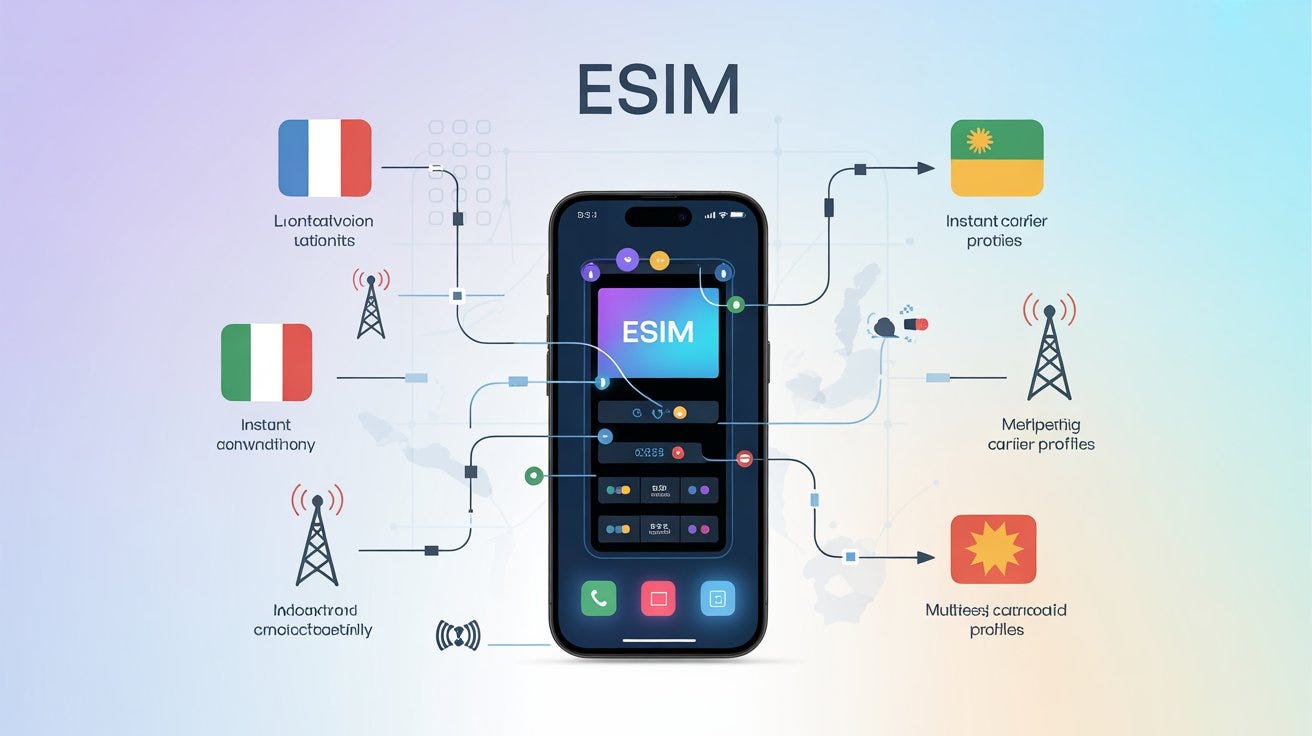
This comes down to partnerships behind the scenes that most users never see directly. Providers that offer multi country coverage have already negotiated deals with local network operators across a whole list of countries ahead of time. Your esim global profile essentially already knows which networks it’s allowed to connect to in each of those places so when you land somewhere covered under your plan it just picks the right local network automatically instead of needing you to do anything manually.
Does the Phone Choose the Network Automatically or Do You Have to Pick One?
In most cases it’s automatic. Your phone scans available networks and connects to whichever one your eSIM profile is authorized to use in that specific location. Occasionally a country has more than one partner network available under a single plan and in those cases some phones let you manually select a preferred one through the settings menu though this isn’t usually necessary for the average traveler just trying to get online.
How Does Data Actually Get Tracked Across Multiple Countries?
Your provider keeps track of usage centrally rather than each individual country’s network billing you separately. So even though you might connect to three different local networks across a two week trip it all gets pulled from the same data pool tied to your original plan. This is honestly one of the more useful parts of the whole system since you’re not juggling three separate balances or worrying about which country’s network is about to run out of allotted data first.
What Happens If You Travel to a Country Not Included in Your Plan?
This is where things can get expensive fast if you’re not paying attention. A plan covering say ten specific countries in Europe won’t automatically extend coverage to a country outside that list. Landing somewhere not included usually means either no connectivity at all until you set something else up or in some cases a fallback to extremely expensive default roaming rates depending on how the provider structured things. Checking the exact country list before a trip matters more than people realize until they’re stuck without service somewhere unexpected.
Why Does Signal Quality Sometimes Vary Between Countries on the Same Plan?
Not every partner network performs identically even under the same provider’s umbrella. A plan might connect you to a strong reliable network in one country and a smaller regional network with patchier coverage in another. This usually comes down to whichever local operator the provider partnered with in that specific market rather than anything wrong with the eSIM itself. It’s worth checking reviews for your specific destinations rather than assuming uniform quality everywhere the plan technically covers.
How Does eSIM Global Coverage Handle Switching Between Wifi and Cellular?
Your phone handles this exactly the way it normally would regardless of whether you’re using an eSIM or a physical one. When connected to wifi your phone prioritizes that connection automatically and falls back to the eSIM data connection the moment wifi drops or becomes unavailable. There’s no extra step involved here since this switching behavior is built into the phone’s operating system rather than anything specific to how the eSIM itself functions.
Is There a Limit to How Many Countries One Plan Can Realistically Cover?
Technically not really though practically most providers bundle plans around specific regions like Europe or Southeast Asia rather than offering one single plan covering the entire planet at a flat rate. Some premium plans do offer near global coverage but they tend to cost more accordingly. The regional bundling approach exists mostly because negotiating partnerships with literally every country’s network operators is a massive undertaking that most providers handle gradually rather than all at once.
What Should Someone Understand Before Relying on This for a Multi Country Trip?
Understand that coverage maps matter more than marketing language describing a plan as global since global sometimes means a specific list of countries rather than truly every country on earth. Check data allowances carefully since heavy navigation or video use abroad eats through allotted data faster than people expect. And keep in mind that signal quality can genuinely differ between countries even under the exact same plan depending on local partner networks.
Final Thoughts
The mechanics behind how this actually works are honestly more straightforward than people assume once you break it down. Your phone scans for available networks the same way it always has. Your eSIM profile already contains permission to connect to specific partner networks in specific countries based on whatever plan you bought. Data usage tracks centrally rather than separately per country which keeps things simple from a billing standpoint. Understanding even just the basics of how eSIM global connectivity works helps explain why it feels so seamless once you’ve actually used it on a real trip.
FAQS
Does an eSIM need to reconnect manually every time you cross a border?
No in most cases your phone automatically detects and connects to an authorized partner network the moment you land without requiring manual setup.
Can data usage be tracked separately for each country visited?
Most providers track usage centrally as one combined pool rather than splitting it out by individual country during a multi country trip.
What happens to connectivity if you fly somewhere outside your plan’s coverage? Coverage usually stops working as expected and you’ll either need a separate plan or risk expensive default roaming rates depending on the provider.
Does signal strength depend on the eSIM itself or the local network?
It depends mostly on whichever local network operator the provider partnered with in that specific country rather than the eSIM technology itself.
Are there phones that can’t use this kind of multi country eSIM setup?
Yes some older or budget phone models still don’t support eSIM technology at all so it’s worth confirming compatibility before relying on one for travel.